1A
Factory and workshop films
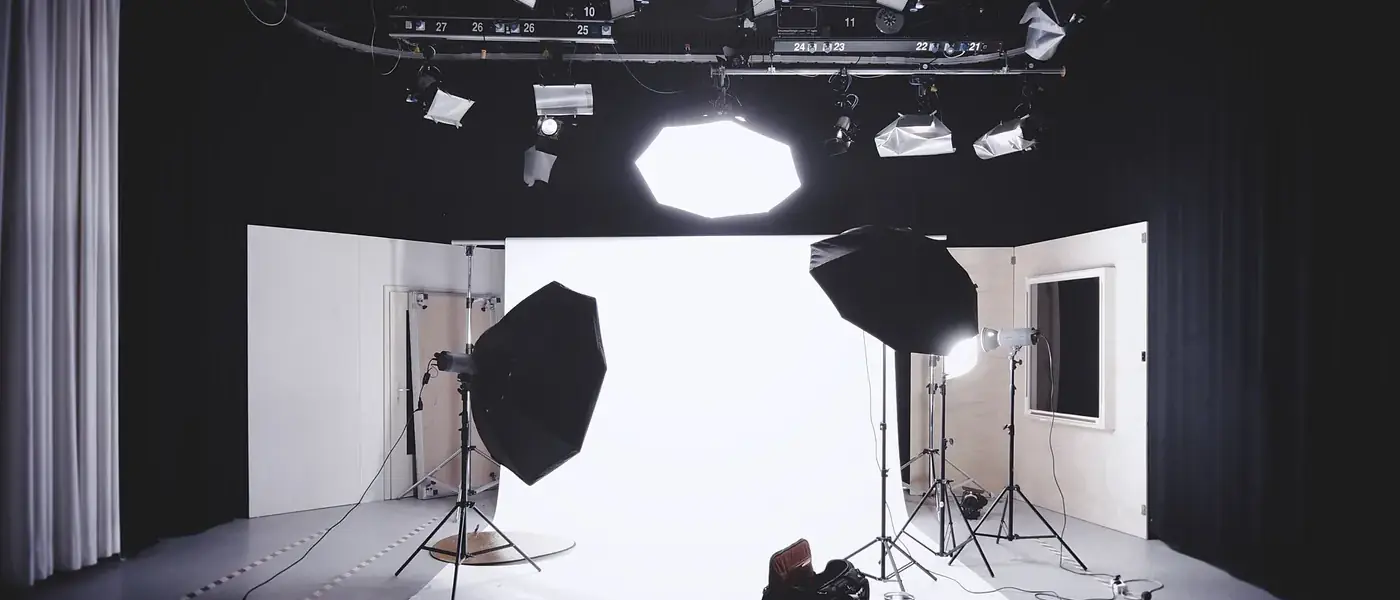
The process, shot in sequence on the floor. We work around the shift, use available light and the practicals already there, and bring in a key and a fill only where the floor needs them. Nothing staged, nothing hidden.
Manchester · Films for makers
Factory, product and founder films, shot on your own floor by a crew of two or three, cut and handed back in weeks. No showreel language, no borrowed footage — the work, filmed as it happens.
Four kinds of film
A film about a place that makes things has a natural order — goods in, the line, the checks, goods out — and we shoot to that order from a shot list, not from a hope. Pick the film that fits what you want to show.
The process, shot in sequence on the floor. We work around the shift, use available light and the practicals already there, and bring in a key and a fill only where the floor needs them. Nothing staged, nothing hidden.
One object, lit and moved. A slow turn on a black or white ground, a hand for scale, the detail that matters held long enough to be read. A sound bed only, unless a voice-over is asked for.
One person talking to camera about the work, cut short. A lav mic, a quiet corner, questions rather than a script, and enough b-roll from the floor to cover the joins.
From the same rushes: square, vertical and wide versions at the lengths each channel wants, captioned, so the master is not the only thing you get for the day.
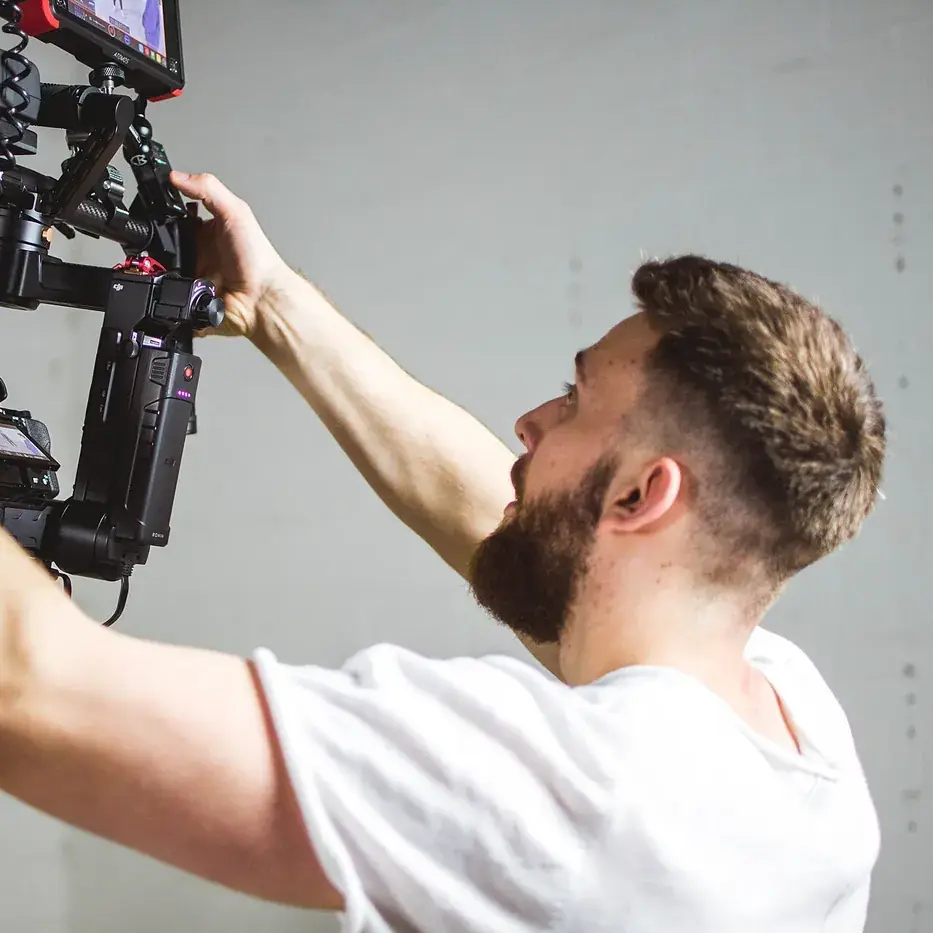
Hand-held rig, checked before the first set-up
About the crew
MM Motion Pictures is a small film crew based in Manchester. We film for companies that make things — food, furniture, castings, textiles, joinery, electronics, packaging, print — and we make one kind of film: short, plain and honest about the place it was shot in. There are two or three of us on the day, one camera unless the work genuinely needs a second, and a cut back with you inside an agreed number of weeks.
We do not turn up with a truck. A factory film is made with a hand-held rig, a couple of lights on stands, a lav mic and a good pair of boots. The people in it work there. The sound in it is the sound of the room. If the place is loud, the film is loud, and we cut to that rhythm rather than pretending it is quiet.
You send the brief through the form: what you make, which of the four films you have in mind, where the site is and when you need it. We reply from the bookings address with questions, not a pitch.
Before a date goes in the diary one of us walks the site with you, in person or on a video call. We look at light, noise, power, access, and what will actually be running on the day. The shot list is written from that walk, and you see it before we come.
We arrive early, set up small, and work through the list in whatever order the floor allows. Faces are only filmed with clearance. Before we wrap you see a contact sheet of what was covered so nothing is a surprise later.
Rushes are backed up twice on the night. A first cut comes back within the agreed number of weeks. You give notes once, as a single list, and we conform, grade and mix from that list.
The master and the cut-downs arrive by download link, captioned, in the ratios agreed. Rushes are kept for a fixed period in case a re-cut is wanted, then deleted.
What we value is simple to say: a shot list that is honest about the time it needs, a crew that never gets in the way of a shift, and a cut that shows the work rather than dressing it up. What we turn down is listed in the next frame, so nobody has to find it out on the day.
Honest limits
If your site needs an aerial, that shot needs a different crew. We film from the ground, from a ladder where the site allows one, and from a hand-held rig for anything that moves.
Everyone in the film works there and everything in the film was shot there. A film about a place should not need to borrow anything from somewhere else.
We describe what we make rather than leaning on names. If you want to see how a factory film is put together, the films page walks through it shot by shot.
A single-take event is a different trade with a different kit list and a different temperament. We would do it badly, so we do not do it.
We can drop a plain caption or a simple diagram into a film where it helps. We do not make films that are only graphics, and we do not build the graphics for someone else's film.
Before you write
A factory film usually lands between two and four minutes. A product film is shorter, often under a minute, because one object can only hold the eye for so long. A founder piece runs two to three minutes, cut down from a much longer conversation. Cut-downs run to whatever the channel wants — most often somewhere between fifteen seconds and a minute.
No. For a factory or product film we write a shot list from the walk-round, and the shot list is the script. For a founder film we bring questions and cut the answers, because people say things to a question that they would never write down for a camera.
Yes, and we prefer it: a running line looks like a running line. We agree with your supervisor where we can stand, keep the crew and the cables out of the walkways, and never ask an operator to stop for a shot. If a process cannot be filmed safely from where we are allowed to be, we shoot around it.
No. None, not as a favour and not through a friend of the crew. The ground, a ladder and a hand-held rig cover everything we make.
You do, once the final invoice is settled: the master, the cut-downs and any graded stills pulled from them. We keep the rushes for the agreed period so a re-cut is possible, and we ask — never assume — before showing any part of your film to anyone.
Yes. We ask for a list of who has agreed to be on camera before the day, and we shoot hands, backs and the work itself for anyone who has not. A face that slips into a shot is cut or reframed before you see the first cut.
One person who can open doors and answer questions, a note to the floor that a crew is in, a quiet hour for any talking-to-camera, and a socket near where the lights will go. The shoot-day page carries the full list, hour by hour.
Tell us what you make and which film you have in mind. We come back with questions, a day plan and a plain quote — no showreel, no pitch deck, no pressure on a date.
Or use the form on the plan-a-film page, which asks the few things we need to reply properly.
The desk is read Monday to Friday, from nine until six.
Shoot days run to the shift they are filming, which means early starts, nights and weekends where the line does.
Manchester, England.
Greater Manchester, Lancashire, Cheshire and Yorkshire without a travel day; the rest of England and Wales with one. We do not film outside England and Wales.