Films we make
Four films, and what each one cannot do.
Every film we make fits one of four shapes. Each shape has a length it usually runs, a set of things that get shot, a number of days it takes, and a limit that no amount of editing gets around. The limits are listed here on purpose, so you choose with them in view.
Length · two to four minutes
The process, in the order it happens
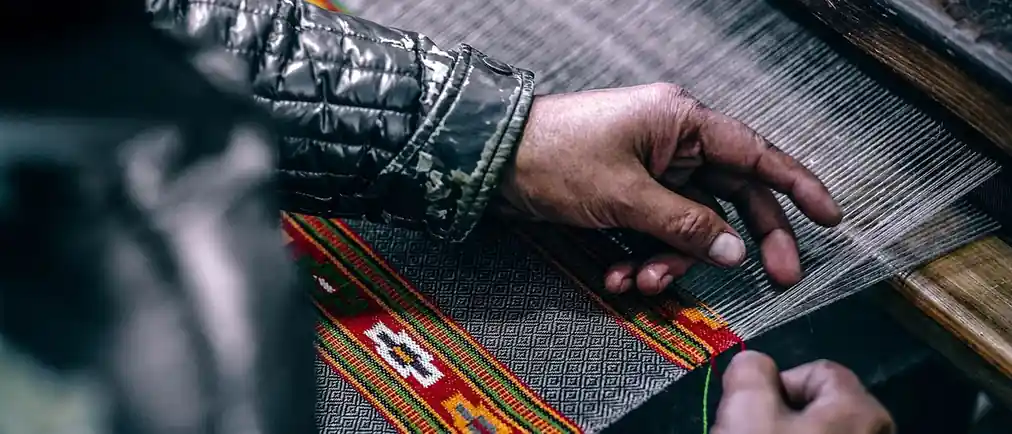
This is the film most companies come to us for. It follows the work from the goods-in door to the loading bay, in sequence, on a normal working day, with the people who do it.
What gets shot
A walk-round before the day gives us the sequence, and the shot list follows it: raw material arriving, the first process, the line at speed, the checks, the finishing, packing and dispatch. For each stage we shoot a wide that places it, a mid that shows the person doing it, and a close on the hands or the tool. We record a sound bed in every room — a minute of the room doing what it does — so the cut has a floor to sit on. Where a machine has a rhythm, we shoot enough of it to cut to that rhythm.
How many days
One day for a single site with one line. Two days where there are several buildings, a night shift that matters, or a process that only runs on certain days. We never try to squeeze two buildings into one day; the second half always suffers.
What it cannot do
- It cannot hide a floor that is not ready. If the floor is mid-refit, the film shows a refit. If a bay is used for storage, it appears as storage. Tidy before, not after.
- It cannot make a slow process look fast without looking like a trick. We use time-lapse only when you understand it will read as time-lapse.
- It cannot show a line that is not running. If production stops for the day we planned, the film waits for a day when it runs.
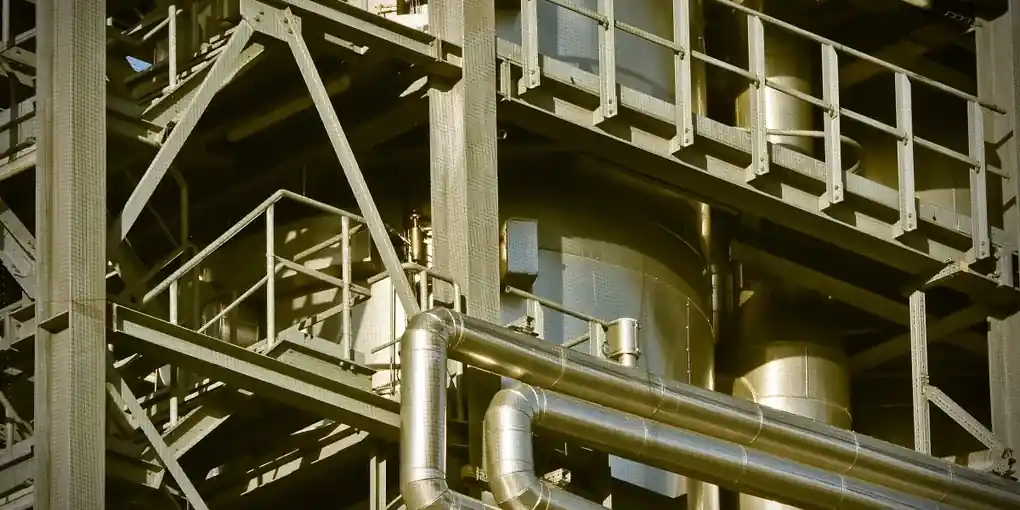
Pipe runs, gantries and ducting: the floor as it is
Length · thirty to ninety seconds
One object, lit and moved
A product film is a study of one thing. It is shorter than a factory film because a single object can only hold attention for so long, and it is slower because every detail is meant to be read.
What gets shot
The object on a black or white ground, on a turntable or moved by hand; a slow orbit; macro passes on the surfaces, joins and markings that matter; a hand for scale; and, if the product does something, a working shot of it doing it. Light is built for the object — a large soft key, a hard edge from behind, and a fill only where the shadow hides a detail. There is no voice-over unless you ask for one; the film plays on a sound bed.
How many days
Half a day for the first product, because the set-up is the work. Each further product on the same set-up takes a fraction of that, so a range of six is usually a single day. Products that need a working shot on the floor add floor time.
What it cannot do
- It needs the product, not a render or a drawing. We film the object in the room.
- It cannot make a pre-production sample look like the finished thing. Every scratch, print misregistration and moulding line shows under a macro lens.
- It cannot invent a use. If the product's job is not visible, we can show it being handled, but we cannot show it working.
Length · two to three minutes
One person, talking about the work
The founder film is a conversation cut short. It works because the person knows the work better than any script, and because the floor behind their words does the rest.
What gets shot
The interview: one person in a quiet room, a lav mic under the collar, one camera on the eyes and, when we bring the second body, a tighter angle for the cut. We bring questions, not a script, and we let answers run long so the good sentence has room to arrive. Then the b-roll: the person on the floor, with the team, with the product, walking the route they walk every day. The film is cut so that the floor covers every join.
How many days
Half a day for the interview and a further half for the floor, usually on the same day. Two or three people talking — a founder and two staff, say — fit in one day if the quiet room is available all morning.
What it cannot do
- It cannot rescue someone who does not want to be on camera. Choose the person who talks about the work at lunch, not the most senior one.
- It cannot be scripted. A read script sounds read. If a legal line has to be said word for word, we film that line separately.
- It cannot be recorded in a room next to the line. The quiet hour is a real condition, not a preference.
Length · fifteen to sixty seconds each
The same day, cut for the feeds
Cut-downs are not a separate shoot. They come from the same rushes as the master, which is why we shoot the day with them in mind: extra headroom for a vertical crop, a beat held longer so a fifteen-second version has a start and an end.
What gets shot
Nothing extra. What changes is how we frame: anything that might become a vertical is shot with room above and below, and the strongest single action of the day is covered from two distances so it can carry a short version on its own. We also record a handful of clean single lines during the interview for the versions that need a spoken hook.
How many days
No shoot days; editing days. A typical set is three cut-downs per ratio — fifteen, thirty and sixty seconds — in the ratios you ask for, each captioned and each delivered alongside the master.
What it cannot do
- It cannot make a vertical out of a shot that was only framed for wide. If verticals matter, tell us before the shoot, not after.
- It cannot invent b-roll that was not shot. A cut-down is a shorter film, not a different one.
- It cannot be re-cut endlessly. One round of notes, as a single list, covers the set.
Not sure which one? Start with the factory film.
It shows the whole place, it gives you cut-downs for a year, and it tells us everything we need to know to make the other three well. Send the brief and we will say plainly which film fits.